For Christmas, my husband bought me a plyo box for our home gym (which is really the guest bedroom). I was looking for something new to mix up my strength workouts, but it needed to be simple, easy to store, and not too expensive.
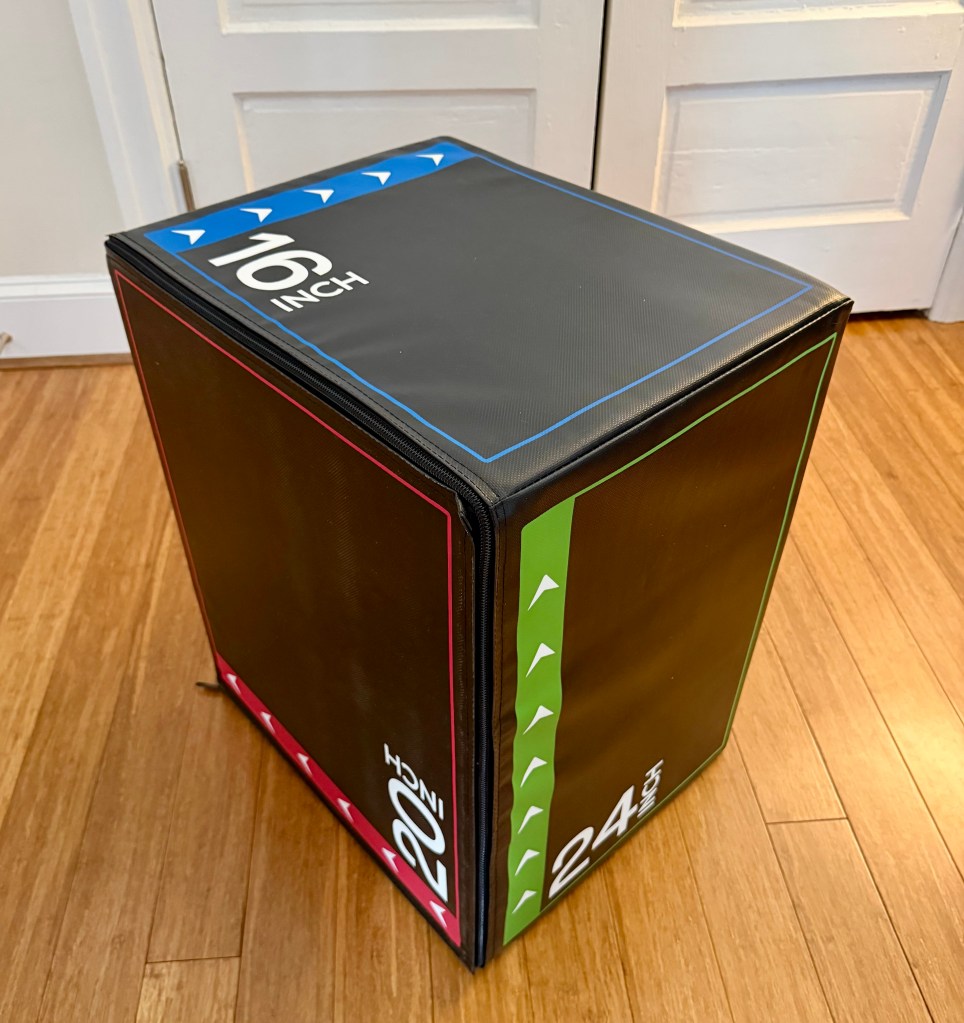
Throughout January, I’ve been using the box in almost every strength session, and I’ve been surprised by just how versatile it is. It’s become one of those pieces of equipment I keep reaching for because it works for strength, power, core work, and mobility.
A plyo box can be especially useful if you’re a runner, short on space, or looking for simple strength tools you’ll actually use consistently.
Here are a few ways I’ve been using it.
1. Lower-body strength (great for runners)
These exercises build strength, stability, and resilience, especially important if you run.
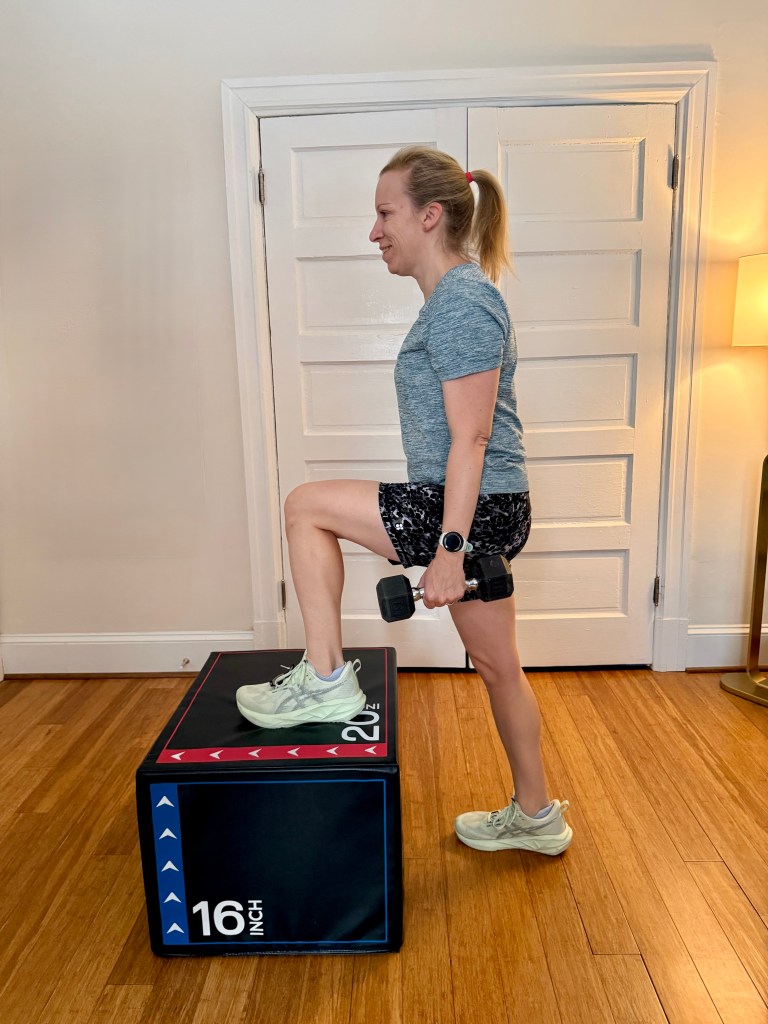
- Step-ups (slow and controlled)
→ Mimic running mechanics and really target the glutes. - Lateral step-ups
→ Excellent for hip stability. - Bulgarian split squats (rear foot on the box)
→ Build single-leg strength and balance.
Tip: I’ve found it helpful to start with the lowest side of the box for all of these exercises. As I get stronger, I’ll rotate it and use the higher sides.
2. Plyometrics & power (use sparingly)
These are great for improving running economy, but only if you’re healthy, well-rested, and not overdoing them.
- Box jumps (jump up, step down)
- Seated box jumps (develop power from a dead stop)
- Depth drops (step off and focus on soft landings)
Tip: Limit plyometric work to 1–2 sessions per week and avoid it when you’re fatigued from other workouts, such as hard runs. Injury risk is much higher when you’re tired.
3. Core & upper body
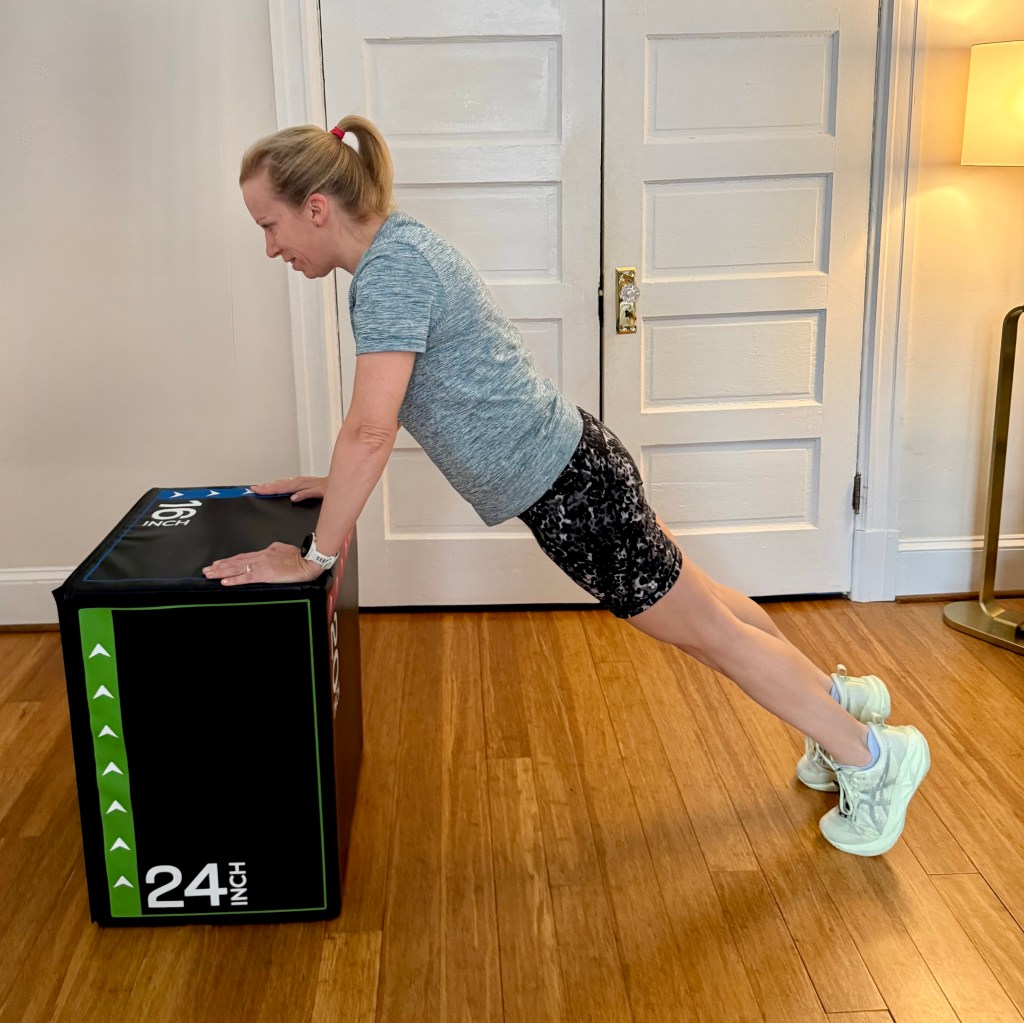
I hadn’t originally thought about using the box for core and upper-body work, but it’s actually very useful, especially if you’re progressing from knee push-ups to full push-ups.
- Elevated planks (hands or feet on the box)
- Mountain climbers (hands on the box)
- Triceps dips
- Push-ups (hands or feet elevated)
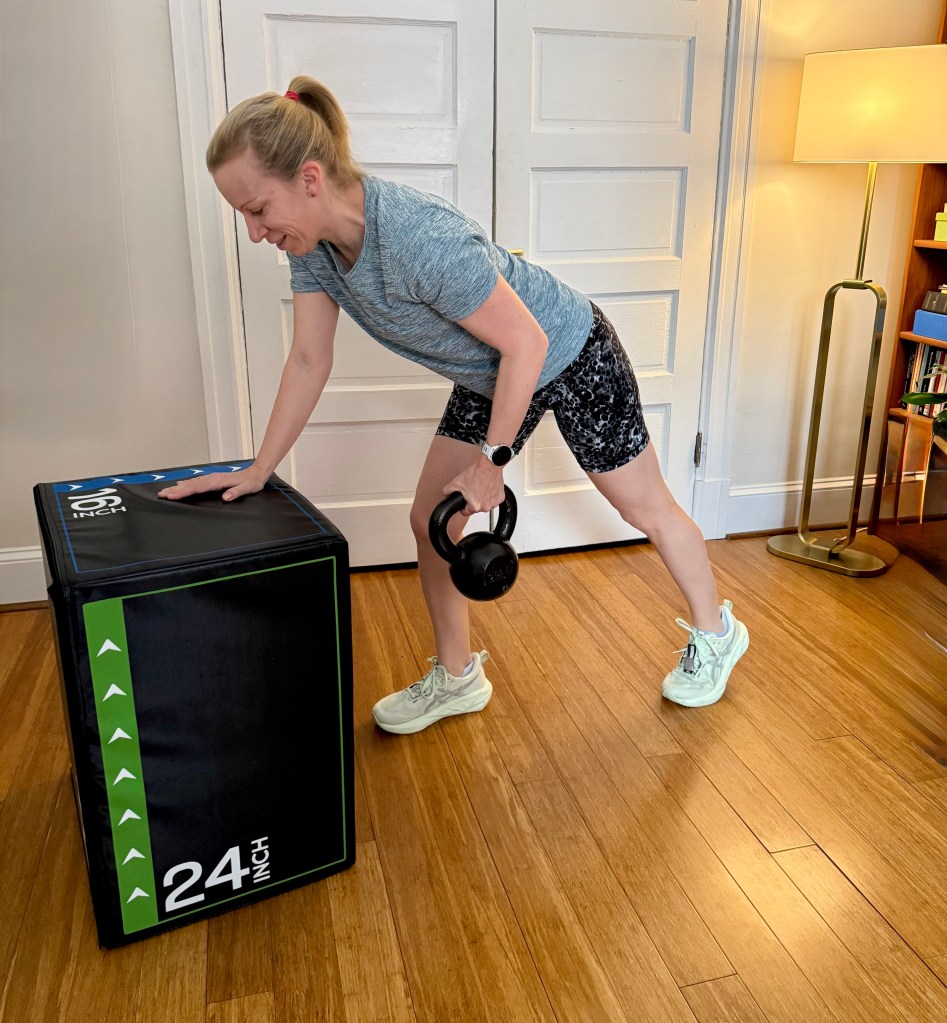
Tip: The box is also great to lean on for single-arm rows. I find the tallest side works best for this.
4. Mobility & recovery
The box has also become a go-to for mobility work and stretching. It stops me defaulting to the sofa or repeating the same stretches on my yoga mat.
- Hip flexor stretches (rear foot on the box)
- Hamstring stretches (heel on the box)
- Calf stretches (ball of the foot on the edge)
- Thoracic openers (one knee on the box)
What to avoid (especially as a runner)
- Jumping down from the box repeatedly — it’s very hard on your knees
- High-rep box jumps when tired — easy to trip or get injured
- Chasing height over control — always prioritise form before height/weight.
I always start with the lowest side of the box and focus on quality movement and I often use a mirror so I can check my form as I go.
As always, if you’re returning from injury or new to strength training, start conservatively and check with a professional if needed.
If you’re curious, here’s a link to the box we bought. It’s a soft box, which reassures me when I’m doing jumps as I’m always nervous about scraping my shins, and this makes me feel much more confident.
I’m still experimenting with how I use the box, but for now it’s earned a permanent place in my strength routine.
Click here to try out a beginner friendly plyo box workout.
 trainingwithvicky.com
Leave a comment