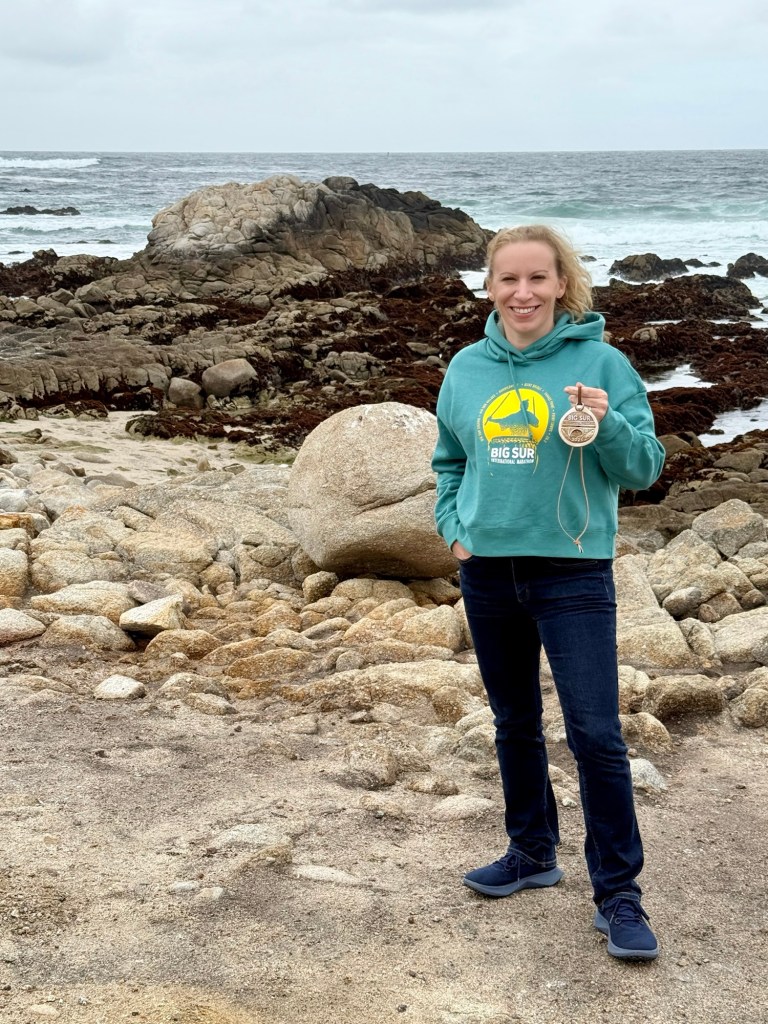
Whether you crossed the finish line with a PB, gritted your teeth through every mile, or soaked in the scenery on a coastal course like the Big Sur International Marathon, one thing is true for all marathoners: recovery matters.
After weeks, and often months, of commitment, training, and race-day focus, it’s tempting to jump straight into the “what’s next?” phase. But giving yourself time to rest, reset, and reflect is not only well-earned, it’s essential for your body and mind, and for longevity in a sport you love.

Recovery Looks Different for Everyone
Post-marathon recovery isn’t a one-size-fits-all process. Several factors play into how much rest your body and mind might need:
- Race effort: Did you race hard for a goal time, or did you run more conservatively?
- Weather conditions: Was it unexpectedly hot, cold, or humid?
- Pre-existing niggles or injuries: Did anything flare up in the weeks leading up to or during the race that might now need a little extra attention?
- Travel and logistics: Long-haul flights, hotel beds, and time zone shifts can add to post-race fatigue.
- Experience level: Are you new to the marathon distance, or have you done this before? First-timers often need more time to recover both physically and mentally.
- Age and stage of life: Recovery can take longer depending on your age, hormones, or what else is going on in your life – whether that’s parenting, caregiving, or work demands.
I recently ran the Big Sur International Marathon, which has an iconic and challenging course. In the past, I’ve raced marathons, but that wasn’t my plan this time. I knew the course was really hilly, and I also knew it was stunningly beautiful, so I treated it more like a scenic long run. I had the best time out there, taking in the views, taking lots of photos (this was the first time I’ve ever run with a phone during a race!), enjoying the fresh strawberries from the volunteers, listening to the pianist on Bixby Bridge, and chatting with other runners.

Because of that, my recovery looked different than it has after previous marathons when I’ve raced harder. This time, I took eight full days off from running and any kind of working out – no guilt, no pressure. Sometimes I’ve taken two or more weeks, depending on how I’ve felt. It’s important to remember that even after the muscle soreness has faded, there’s still damage and inflammation in your body that you can’t see.
I used my time to rest and do some of the things I’d neglected during training. My husband and I spent two days in San Francisco before flying back home to DC, so we explored the city and enjoyed a delicious Italian dinner near where we used to work. Once back, I ate whatever I felt like, watched a lot of Netflix, and caught up with friends over drinks and appetizers. I went out for brunch on the weekend and followed it up with a bit of shopping. I didn’t think about running at all, except to admire my medal and scroll through race photos, and it felt great! We even spring-cleaned our apartment to make it feel fresh for the summer months.
The Mental Break Matters Too
Beyond the physical recovery, marathon training demands a lot of mental focus, from juggling early mornings and long runs to navigating self-doubt and fatigue. I’ve found that stepping away for a while helps me reconnect with other aspects of my life, remember why I love running, and just enjoy moving my body for fun rather than purpose.
The other day I tried skipping / jump-roping for the first time in about 20 years, something I’d never have done mid-training cycle. I also skipped a run yesterday because the weather was bad and I didn’t feel like it, and did a strength workout instead. Also unheard of during a marathon training cycle.
This in-between time, after the race but before the next training block, is also a great opportunity to reflect on your marathon experience and begin dreaming about future goals. I’ve been doing just that, sketching out ideas and intentions for what comes next. (I’ll be sharing more about those plans in an upcoming post!)
Give Yourself Permission to Pause
Whether your post-marathon recovery involves a full fortnight off, a few gentle walks, or a return to cross-training, what matters most is that it works for you. Not your Strava stats, or Instagram. Not what someone else is doing. Just you. Taking a break isn’t about losing fitness, even though it might feel like you are. It’s about preserving your long-term love of running. Your body will thank you. Your mind will thank you. And when you’re ready to train again, you’ll be coming from a place of rest, not exhaustion or burnout.
So here’s your reminder: Take the rest. Give your body time to heal and your mind time to breathe. You’ve earned it, and it’s the best way to make sure you’ll be able to keep running healthily and with motivation, for years to come.
 trainingwithvicky.com
Leave a comment