
When I entered the Big Sur Marathon lottery last year, I didn’t fully grasp what I was signing up for. I’m used to big-city marathons; flat, fast courses with huge crowds of spectators and high energy from start to finish. Big Sur, by contrast, is the polar opposite: small, hilly, and serenely quiet, winding along a stretch of California’s iconic Highway 1. The race has a reputation for being challenging, breathtakingly beautiful, and impeccably organised, and I can confirm all of that is absolutely true.
My husband and I flew into San Francisco on the Thursday before race weekend, giving ourselves plenty of time to drive down the coast to Monterey, where we were staying and meeting up with friends. I’ve been to San Francisco a number of times for work and know the city fairly well, but I wasn’t prepared for the stunning coastal scenery that greeted us as soon as we left the city behind on Friday morning. The drive south was spectacular.
The journey to Monterey takes a couple of hours, longer if you stop to take in the dramatic ocean vistas along the way. We powered through, hoping to reach the race expo before it closed, and we did, with time to spare. The whole process was seamless. Parking in Monterey is straightforward, and the town is compact enough to walk easily to the Conference Center where the expo is held.
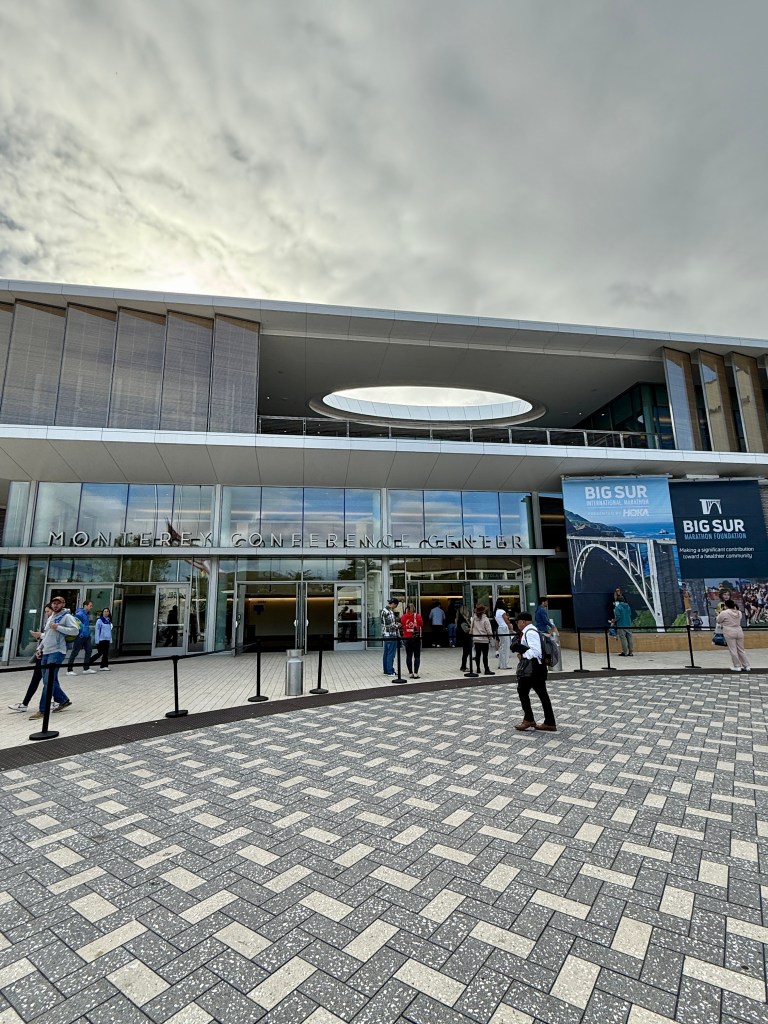
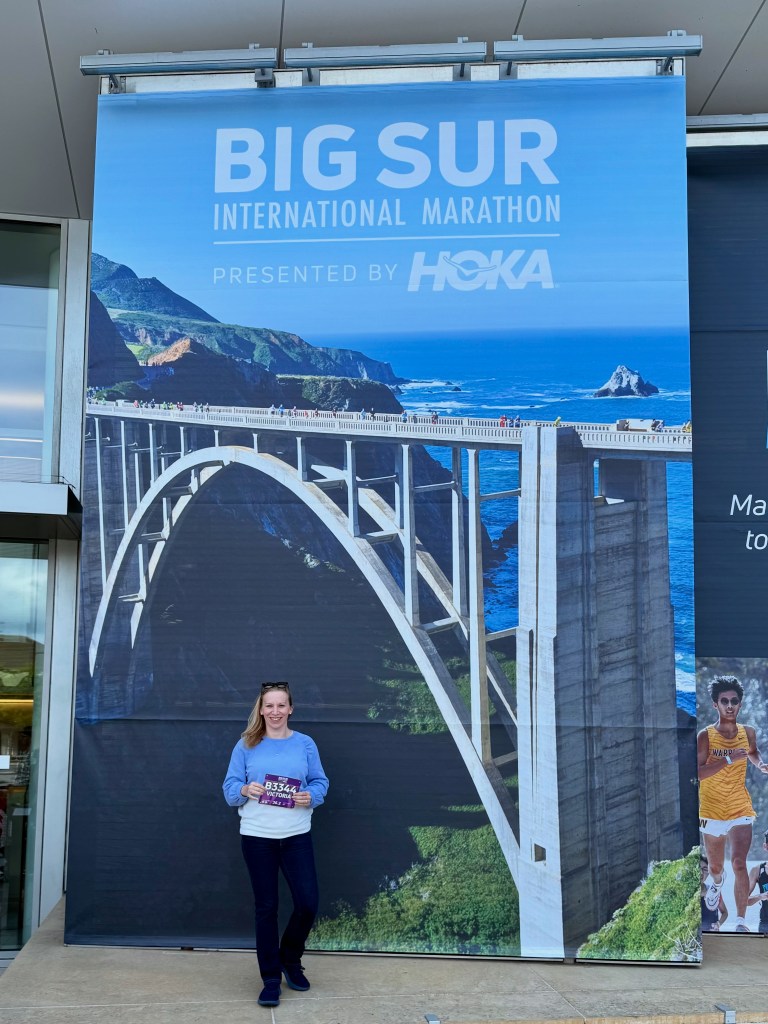
The expo itself is split across two floors. Upstairs, runners collect their bibs, bus tickets, and optional pasta dinner vouchers. Downstairs is the main expo space, where we picked up our long-sleeved race shirts (it’s rare to get a great long-sleeved shirt, and this one is awesome) and browsed the impressive selection of Big Sur merchandise. I always allow myself one race souvenir, so I picked up a hoodie I know I’ll wear constantly. There were also tanks, tees, jackets, mugs, visors, stickers – you name it, they had it! If you happened to forget anything, there were plenty of vendors including Hoka (the race’s main sponsor), United Airlines, local running stores, and Nuun, which was the on-course hydration. And just a few minutes’ walk away is Fleet Feet, a large running store offering clothing, nutrition, hydration and even custom Big Sur decals ironed onto running kit. Outside of the expo is the iconic backdrop of Bixby Bridge where everyone gets their photo taken. If you’re there alone, there are lots of people helping to take photos, so don’t worry about needing to find someone.
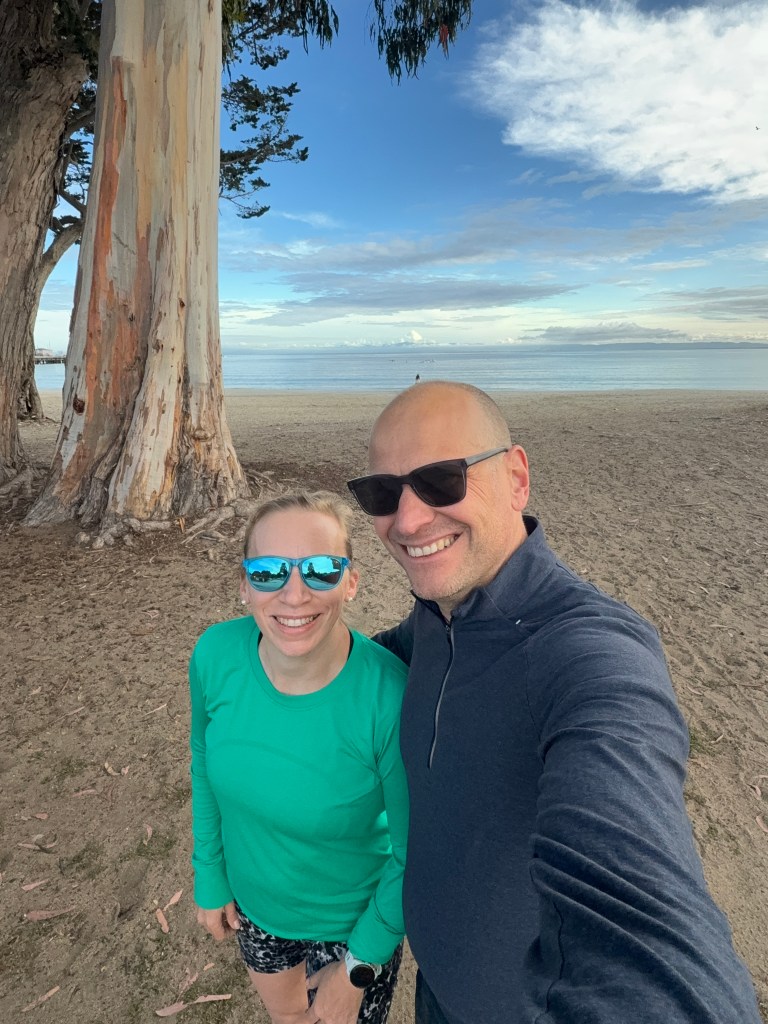
Hoka also hosted an official shakeout run on Saturday morning, which looked like a great time. We skipped it in favour of an earlier run, having been up since 4am, but I heard it was the largest shakeout they’ve ever held, and early birds received limited-edition shirts. Everyone I spoke to said it was great fun and well worth signing up for. Instead, my husband and I ran 2.62 miles along the beachfront, followed by a walk on the sand where we searched for shells and he dipped his feet in the Pacific. It was blissfully beautiful and I couldn’t work out which way to look first as everything is was so stunning!
That evening, we headed from our hotel (The Hilton Garden Inn) to the official pre-race pasta dinner at the Marriott Hotel, which we’d booked in advance. I’d heard mixed reviews, with some saying it was pricey and a bit average, but I’m so glad we went. The event was held in a vast ballroom and ran like clockwork. Long buffet tables at each end were piled with salads, pastas, vegetables and sauces, and dessert tables stood in the centre. We found the food plentiful and tasty, and it was heartening to hear from the race director that the dinner serves as a fundraiser – Big Sur is a non-profit event deeply rooted in the local community. I hadn’t realised how many ways the race gives back: offering various race distances for runners and walkers, and channelling millions of dollars back into community projects. The pasta dinner was a convenient, feel-good way to fuel up and connect with other runners. I’d highly recommend it if you’re coming in from out of town as it took the guesswork out of finding a good restaurant.
One of the best decisions we made travelling from the East Coast was sticking to our home time zone. Yes, we ate dinner at 5pm and went to bed embarrassingly early, but it made race morning infinitely more manageable! Big Sur’s race logistics are a marvel: hundreds of buses shuttle thousands of runners; marathoners, relay teams and 11-milers, to the start line from various local pick-up points. Because of this scale, buses begin loading as early as 3:45am. So if you’re running Big Sur, be ready for a very early alarm!
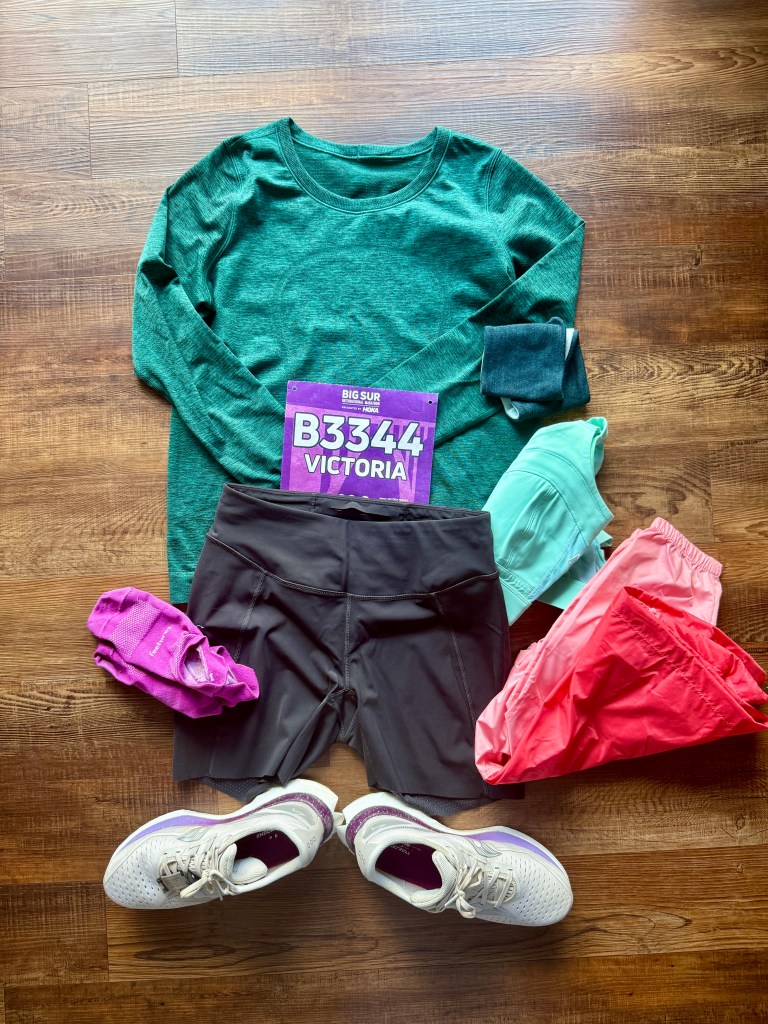
This year’s weather added another layer of challenge. Historically, the race enjoys fair weather, clouds and sun, but this year promised rain, chilly temps, and strong winds. I agonised over what to wear before finally settling on shorts, a long-sleeved top, and a budget windbreaker I’d picked up for $20 a few weeks earlier. The windbreaker turned out to be a lifesaver; I wore it for the entire 26.2 miles and only took it off for photos in the final stretch. If you run Big Sur, check the forecast closely as mornings can be cold and the weather changes fast. Bring warm throwaway layers for the early wait as I saw so many people who didn’t, and they were cold and damp.
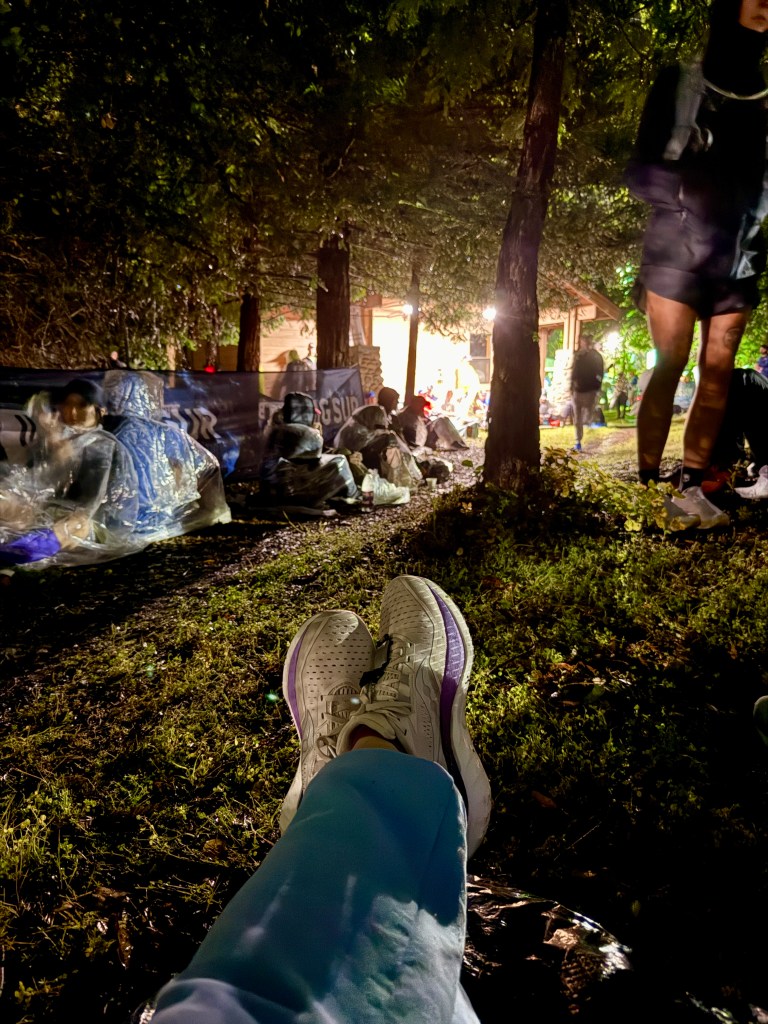
The start area itself is simple: a makeshift zone in what feels like a car park, with a grassy section and a small wooden lodge. After an hour-long, winding bus journey through the hills in the dark, we arrived to drizzle and dim lighting. The race team had set up tea and coffee stations, ample portapotties, and gear check vans and the signage was really clear to each wave’s area. I was so glad that I’d come prepared for the wet weather: I brought three trash bags; one to sit on, one as a makeshift raincoat over my throwaway warm gear, and one as a leg covering to keep my feet dry. I even had a spare ziplock bag for my hair. I know I looked ridiculous, but I didn’t care as I was warm, dry and had a cup of hot tea. Around me, other runners had come just as prepared – foil blankets, rain covers, and even mini camps under trees. With over an hour to wait before the race start, staying warm and dry made such a huge difference to my enjoyment of the event.
About 25 minutes before the race, I headed to the portapotties and then checked my clear kit bag. Be warned: the queues for the portaloos were long, and the gear check area is inside the starting corral, making it tricky to navigate through the crowd. A human chain formed to pass bags to the gear trucks and I crossed my fingers and hoped mine would make it (spoiler alert – it did!).
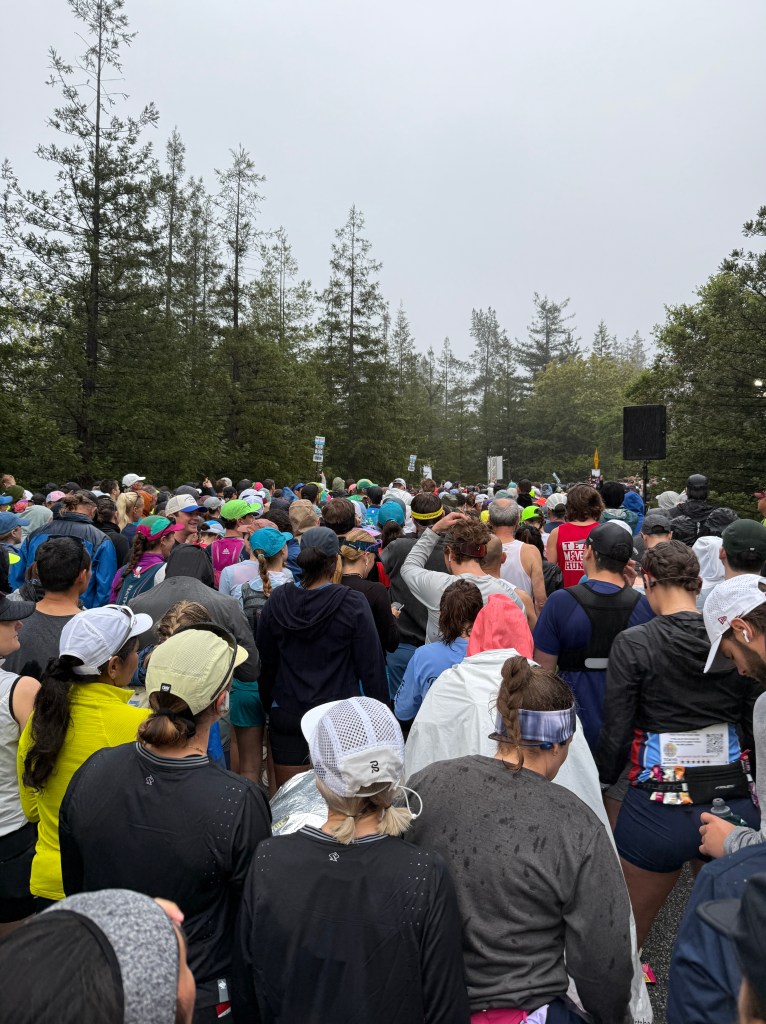
Once in the corral, I chatted with a few friendly runners, which helped ease the nerves and set the tone for a positive start. Everyone was so excited for the opportunity to run along Route 1 in such a gorgeous part of the world. Wave 1 set off five minutes ahead of Wave 2, and soon enough, we were over the starting mats and into the redwood forest. The first few miles are downhill and gently rolling – the perfect warm-up. The mist and drizzle made the landscape feel almost otherworldly and brought out the greens and browns in the foliage.
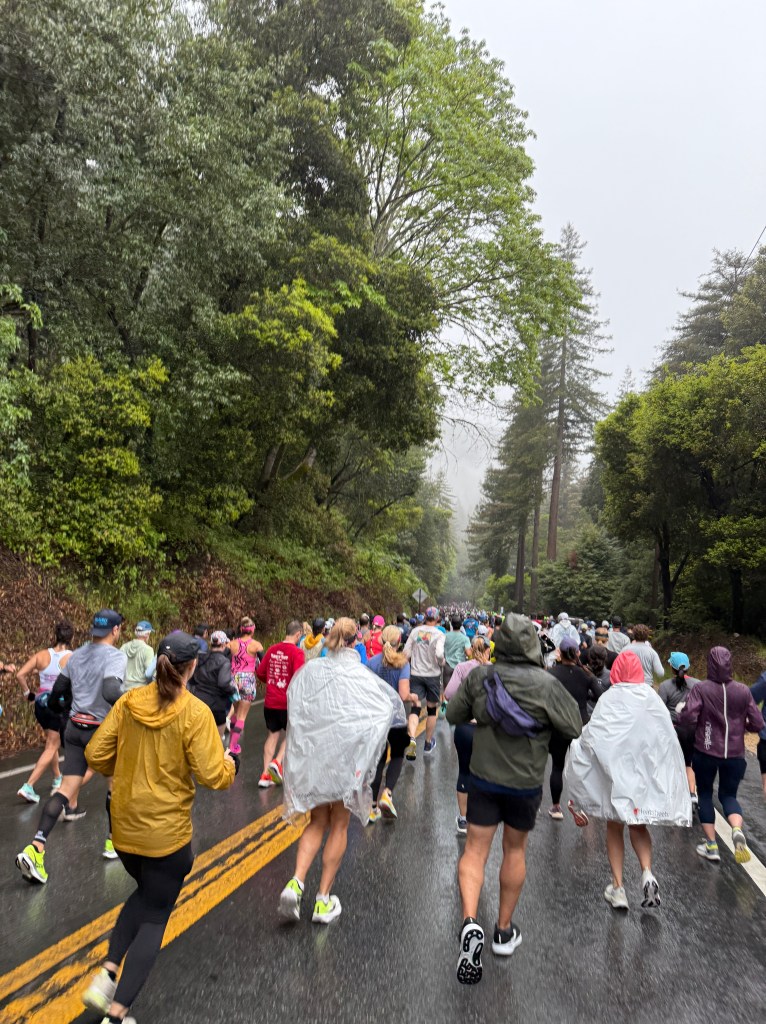
A quick tip: although both sides of the road are closed to traffic, only one side is used for runners—the other is reserved for race support. Stick to the left to give support cyclists and vehicles room to pass safely. Also be careful of the lines in the middle of the road and the cats-eyes as they are all little holes and it would be easy to roll your ankle.
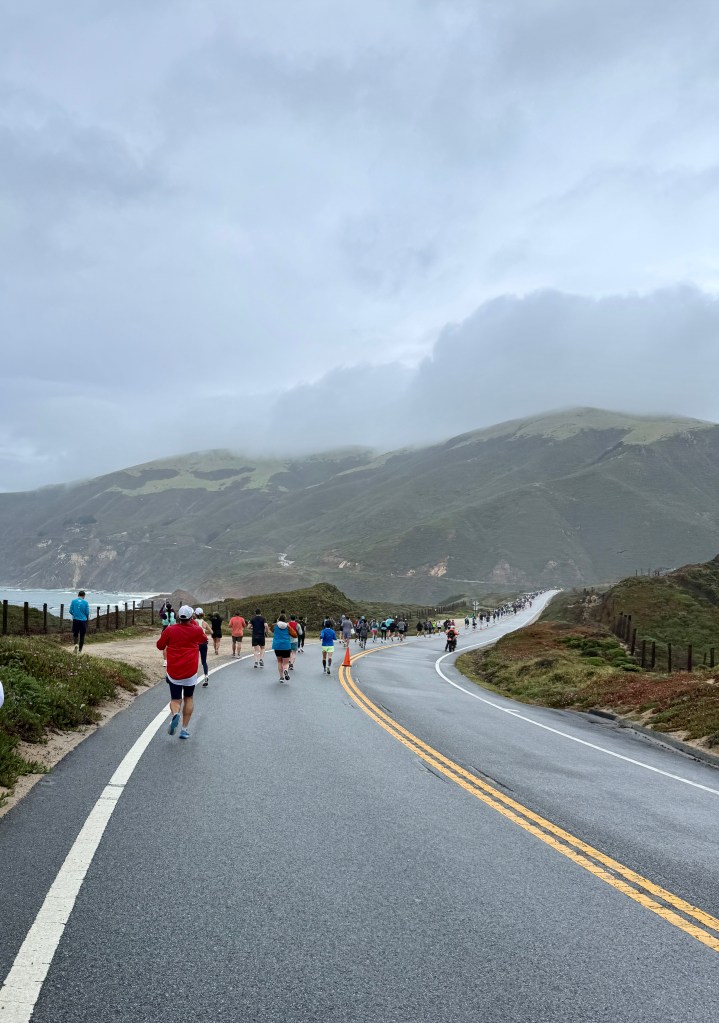
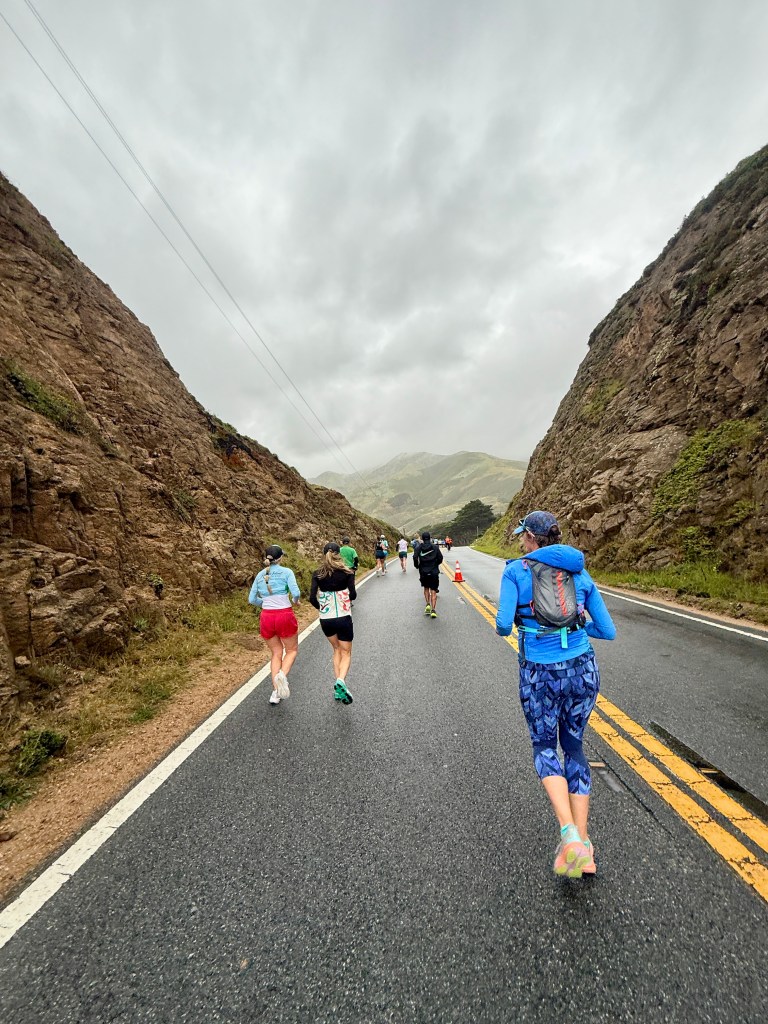
At around mile 5, the hills begin, and they don’t let up until you cross the finish line. The route rolls endlessly along the coastline, winding through breathtaking scenery. While I’d trained on hills in Washington DC, nothing quite prepared me for the terrain here. Still, I didn’t find them as bad as I’d feared. Perhaps it was the jaw-dropping views at every turn: dramatic cliffs, crashing waves, spring wildflowers, green hills, and sweeping valleys. Even in the stormy weather, the landscape was spectacular.
The course was also filled with welcome distractions. Aid stations were plentiful and well-stocked with water, Nuun, fruit, and gels. I tucked into orange slices, banana chunks, strawberries, and my own fuel along the way. Each station also had medics and toilets, offering fantastic support throughout. The volunteers were all so amazing and it was great to hear the runners thanking them all as we passed.
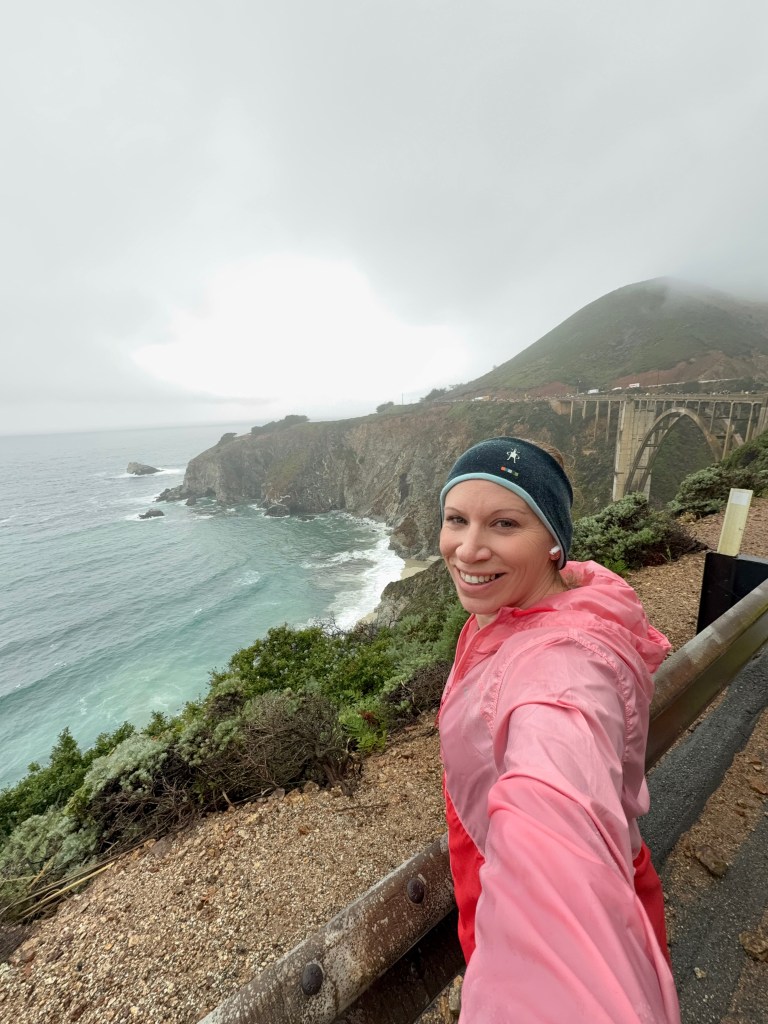
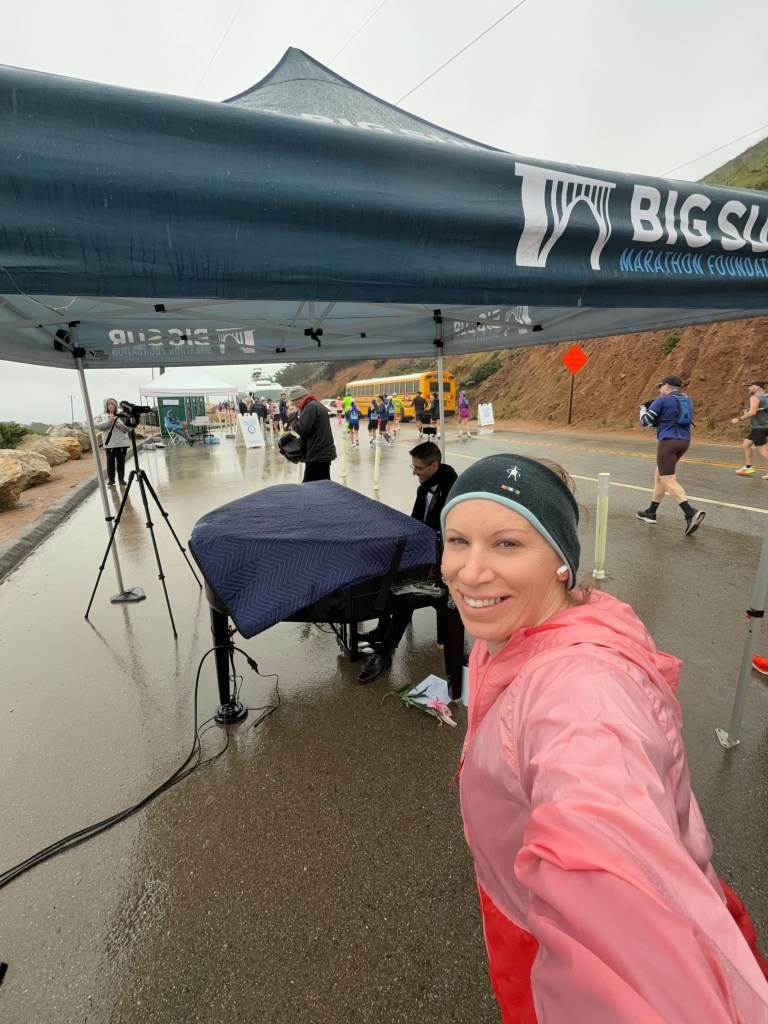
Despite the absence of major crowds, there were pockets of cheering spectators near homes along the course. And then there were the legendary drummers, stationed in rain-soaked determination, the pianist bravely playing atop Bixby Bridge after the race’s longest two-mile climb, cheer squads, and a lively Hoka cheer zone. The dedication of the volunteers and supporters was inspiring, especially in such miserable weather!
Big Sur was, without doubt, the toughest marathon I’ve ever run, but it didn’t feel like a slog. The support, the camaraderie, the scenery all added up to something special. Unlike many big marathons, the focus wasn’t on pace, which meant runners chatted, encouraged one another, and shared the journey. I spoke to several first-time marathoners and was completely in awe. If that’s you, wear a sign on your back as people will cheer for you! I saw some of those same runners celebrating at the finish and it made me so happy.
While the second half of the race is technically “easier,” don’t be fooled, it’s still full of rolling hills. For me, the toughest climb came at mile 25. It looked steep and loomed for ages in the distance. I gave myself permission to walk briefly to bring my heart rate down, which meant I could sprint the final stretch and finish strong.
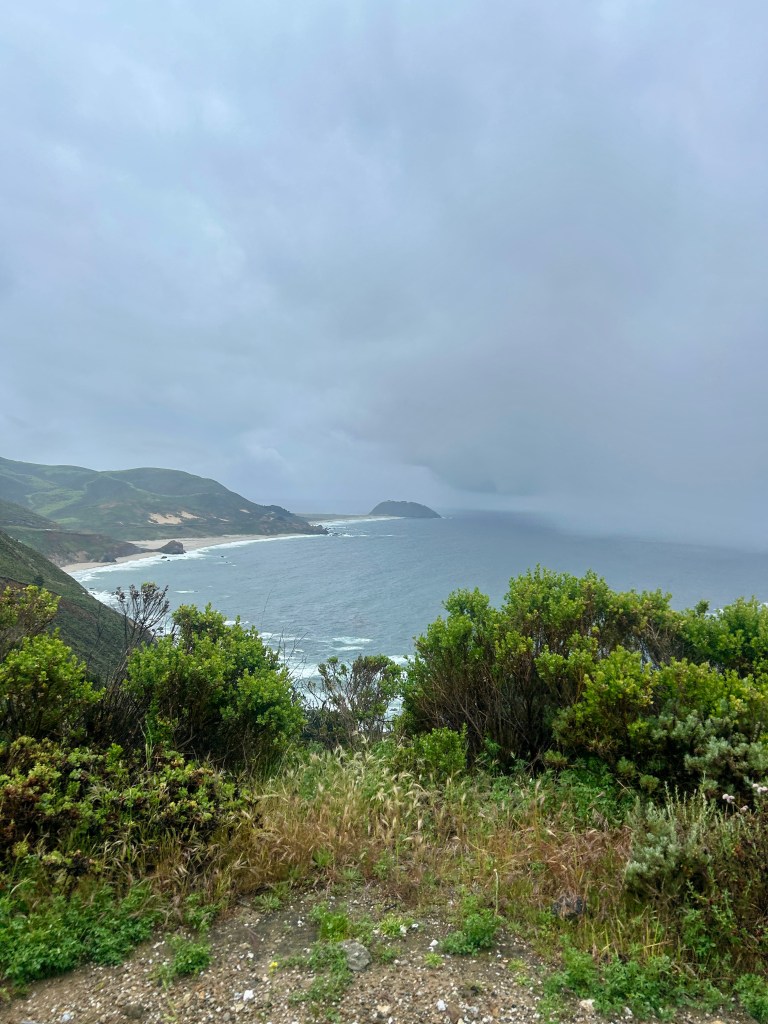
The finish area in Carmel was awesome. My husband, who had run the 11-miler and somehow waited in the cold for two hours, managed to get a coffee from Starbucks and snag a seat in the small grandstand. Spectators have plenty of options nearby for food and cheering spots as Carmel town centre is just a couple of minutes away, so if you have family in town with you, encourage them to come to the end of the race.
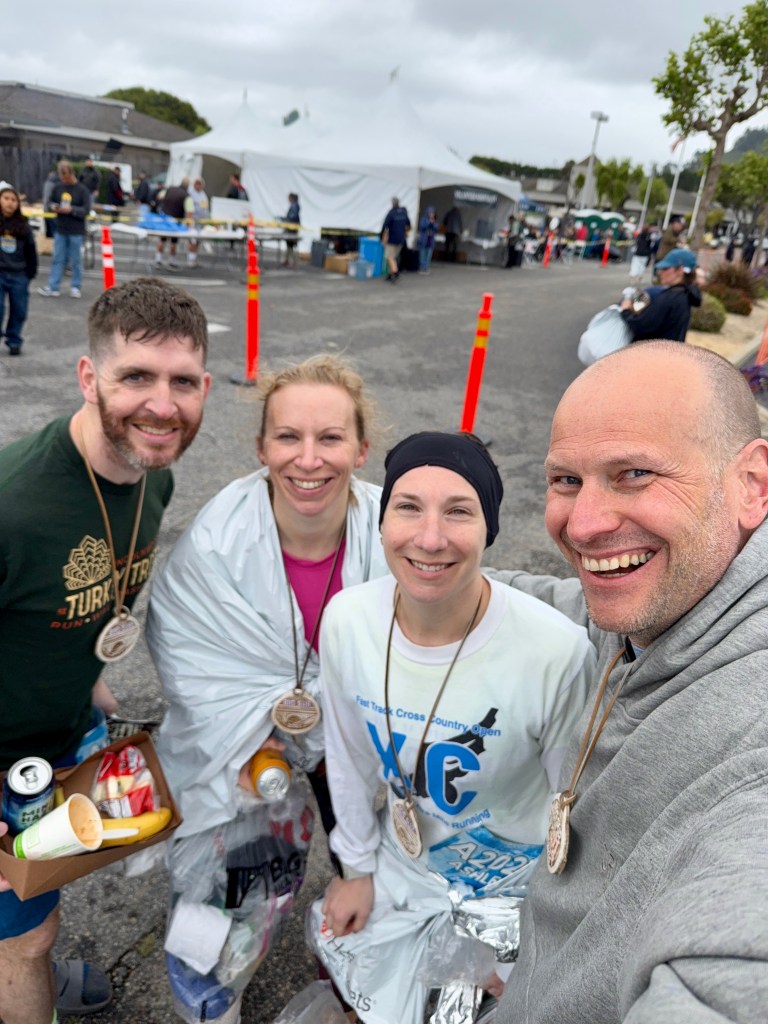
As I approached the finish chute, I heard announcers calling out names and milestones: first-timers, veterans, charity runners – it was wonderful. Post-race, everything ran like clockwork: medals, photos, food tents with fruit, cookies, crisps, drinks, and even warm soup and beer. Collecting my kit bag was the fastest I’ve ever experienced as my volunteer actually walked it over as I approached.
The final cherry on top? The shuttle bus back to our drop-off location was prompt and easy adn the vus driver was super kind and took us directly to our hotel so we didn’t need to walk any more steps that day! The logistics, like everything else at Big Sur, were flawless.
We opted to stay at The Hilton Garden Inn which was one of hotels listed on the race website. I wasn’t sure what to expect, but it was a big hotel with everyhting you’d need. Rooms were large and really clean, with balconies. There’s a garage to park under the hotel, and then a pool, hot tub and fire pit to relax at after the race. On race day morning, the hotel puts out free coffee, bananas, water and snacks at 3am, which was really welcome. And for the morning after, there’s a restaurant on site if you want to fall out of bed, right in to breakfast. If I was running Big Sur again, I’d definitely consider staying here as it’s so convenient and the staff are incredibly helpful.
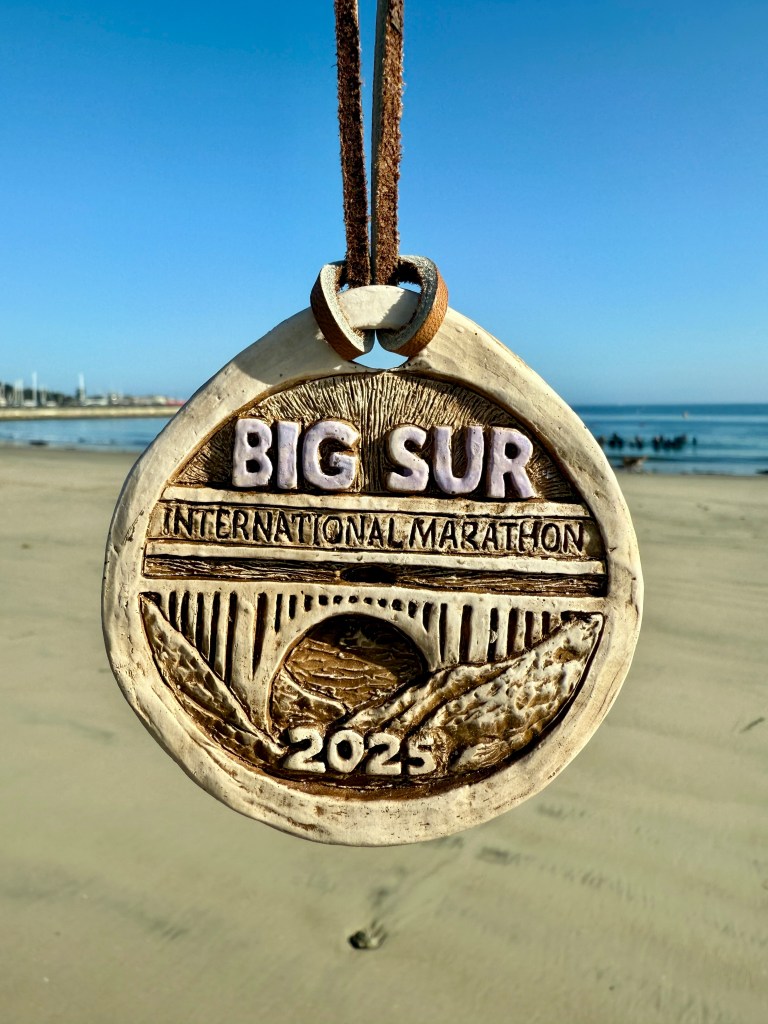
Is there anything you’d like to know about the Big Sur Marathon? Please ask below as I’d be happy to answer your questions. It truly is an incredible race and well worth participating in.
 trainingwithvicky.com
Leave a comment