Choosing the right running shoe is crucial for comfort, performance, and injury prevention. For almost 8 years, I ran in Mizuno Wave Inspires. I loved how they felt underfoot as I could feel the road, and they were light. No matter how many other shoes I tried, nothing ever felt as good, and I always went back to my trusty Mizunos. Fast forward a few years, and I’m now a lot more flexible in my shoe choice. It’s taken a lot of trial and error though, and I’ve spent a lot of time in running stores testing out different brands and models! If you’re about to start running or training for your first half marathon or marathon, then there are quite a few things to consider when buying your running shoes. In the end, experience will help guide you as it’s important to run in something that feels comfortable, but until you find ‘your shoe’, here are some things to consider and factor in to your decision making:
Understand Your Foot Type
Knowing a little bit about your feet before trying on shoes can be really helpful as it’ll narrow down your choices.
Arch Type: Identify your arch type (high, normal, or flat) by performing a wet test or consulting a specialist. This helps determine the level of support you need.
Pronation: Understand your pronation (how your foot rolls when you run). There are three types: overpronation, neutral pronation, and underpronation (supination). Specialized running stores can analyze your gait to determine your pronation type.
Know the Different Types of Running Shoes
There are lots of different types of running shoes, suitable for different foot types. No one type is better than another; it’s really about what fits you best and feels the most comfortable.
Neutral Shoes: Suitable for neutral pronators and underpronators. They offer good cushioning and flexibility.
Stability Shoes: Designed for mild to moderate overpronators. They provide added support and stability.
Motion Control Shoes: Best for severe overpronators, offering maximum support and control.
Cushioned Shoes: Ideal for underpronators and those needing extra shock absorption.
Minimalist Shoes: Best for experienced runners with strong foot mechanics. They mimic barefoot running, providing minimal cushioning and support.
Trail Shoes: Built for off-road running, offering better grip, stability, and protection.
Super shoes: Designed for high-performance with advanced technology to enhance athletic performance, particularly in long-distance running.
Consider Your Running Style and Terrain
Depending on where you’re going to be logging most of your miles, you’ll want to choose a shoe that works well for the surfaces you’ll be on.
Road Running: Shoes designed for pavement and occasional forays onto packed surfaces.
Trail Running: Shoes designed for off-road, providing traction and protection. These often have more substantial grip than a regular road shoe.
Track Running: Lightweight shoes for speed and performance on a track. You’ll find that these aren’t cushioned, and are minimal in how they are made. Sometimes they also have spikes in them, to help with grip.
Fit and Comfort
Regardless of all the bells and whistles your shoes might have, the most important thing is that they are comfortable. If they aren’t, you’ll be a lot less likely to get out of the door to run, and worse, you could give yourself an injury.
Size and Fit: Your running shoes should be at least half a size larger than your regular shoes to accommodate foot swelling during runs. Depending on the shoe, I sometimes go up a while size! Ensure there’s about a thumb’s width of space between your longest toe and the front of the shoe.
Heel Fit: Your heel should fit snugly without slipping.
Midfoot Fit: The shoe should snugly but not tightly fit the arch and midfoot area. If it’s too tight, you’ll find yourself getting pins and needles in your feet.
Toe Box: Your toes should have enough room to wiggle and splay naturally. Make sure they don’t spill over the edge of the foam sole, as this can cause rubbing and blisters.
Test the Shoes
The best thing to do before buying new running shoes is to go to your local running store to try a few out. Take your running socks with you, as well as any orthotics if you need them. Often, it’s possible to run a little on the treadmill in the store before you commit to a specific pair of shoes, so if you’d like to do that, consider wearing workout clothes. If you’re a woman, at least take your sports bra. When you’re in the store, do a walk and run test. Walk around and run a few steps in the store. Jump up and down, and if there’s a treadmill, take a few minutes to walk and run on it to see how the shoes feel. Don’t feel pressured to make a quick decision; running stores are used to their customers taking their time. Ask yourself whether you think you’d find the shoes comfortable after a few miles.
Price Range and Return Policies
Price: High-quality running shoes typically cost between $100-$150. More expensive models may offer additional features but it doesn’t mean that they are going to work any better for you. The good news is that once you find a shoe that you like to run in you can often find previous models on sale. Finally, before purchasing, check the store’s return policy in case the shoes don’t work out after a longer run.
Other Tips
Brand Loyalty: If a specific brand has worked well for you in the past, consider starting there as often different shoes from the same brand have similarities in fit and comfort.
Reviews and Recommendations: These days there are lots of shoe reviews online. I like Running Shoe Guru for the thoroughness of their reviews as well as the inclusion of women’s shoe reviews which can be hard to find. It can also be helpful to ask fellow runners at running clubs and group runs for their advice and experiences.
Summary
Choosing the right running shoe might seem complicated, but with a little research and some guidance from a good running store, you will be sprinting comfortably in no time at all! Know that taking the time to find the right shoe is really worth it as the right ones will enhance your running experience, make running more enjoyable and help prevent injuries.
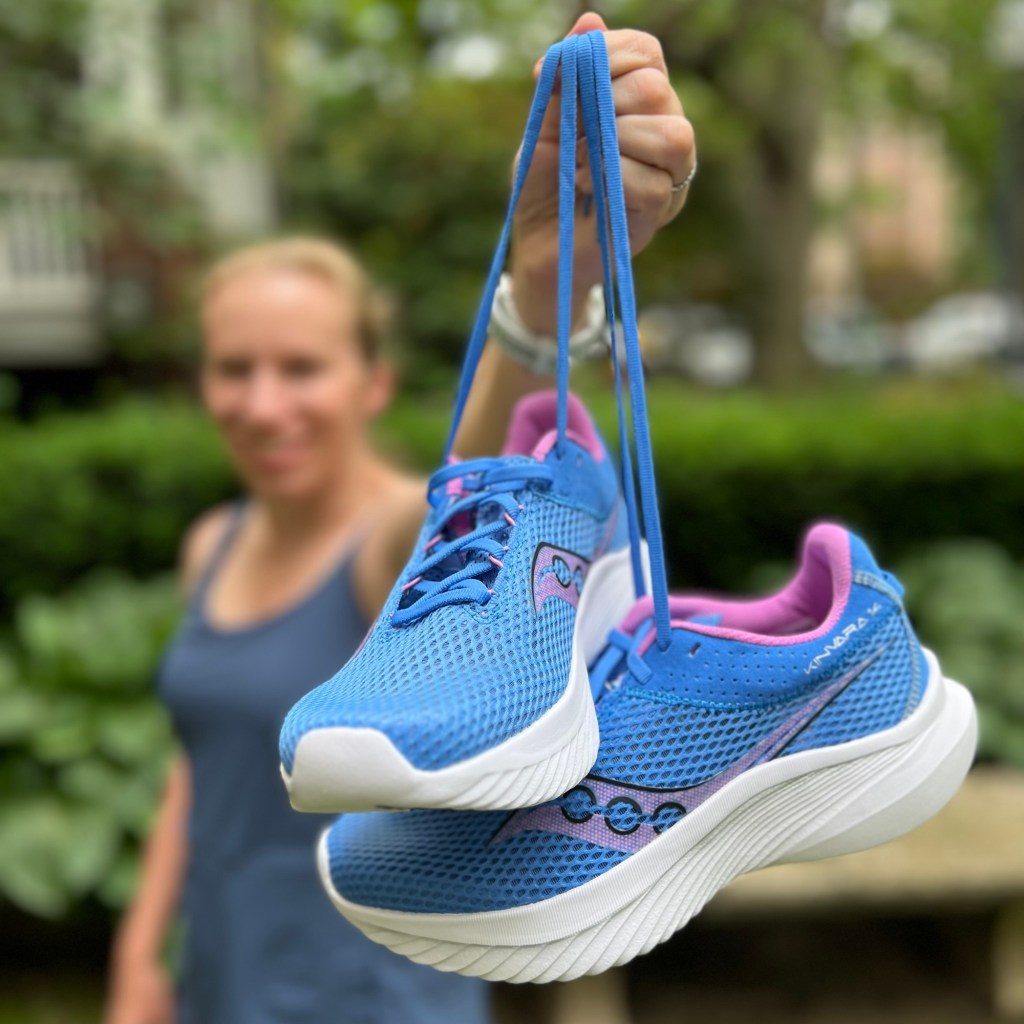
These days I run in Saucony Kinvaras for my easy runs and the Endorphin Speed 3s for more uptempo work. I’ve learned from experience (and also from the advice of professionals when I’ve had injuries), that for me, it’s important to have a flexible shoe that enables my foot to move freely. At one point I tried Altras with a 0mm drop, but I didn’t enjoy them and felt that there was a lack of return on the shoe – my legs felt like lead all of the time. A few other shoes felt too close to the ground for me, and my feet hurt after a few miles. The Kinvaras have proven to be a great match. They are flexible, fairly cushioned, yet responsive, and extremely light. I enjoy the Endorphin Speeds too, but I’m still getting used to their rigidity. I love how fast they make me feel, but I get a little bit of back ache with them, so the jury is still out. It’s possible it’s not the shoe, and it’s more than I need to strengthen my hamstrings and glutes as well as my core!
Enjoy running shoe shopping! Let me know if you have any questions.
 trainingwithvicky.com
Leave a comment