
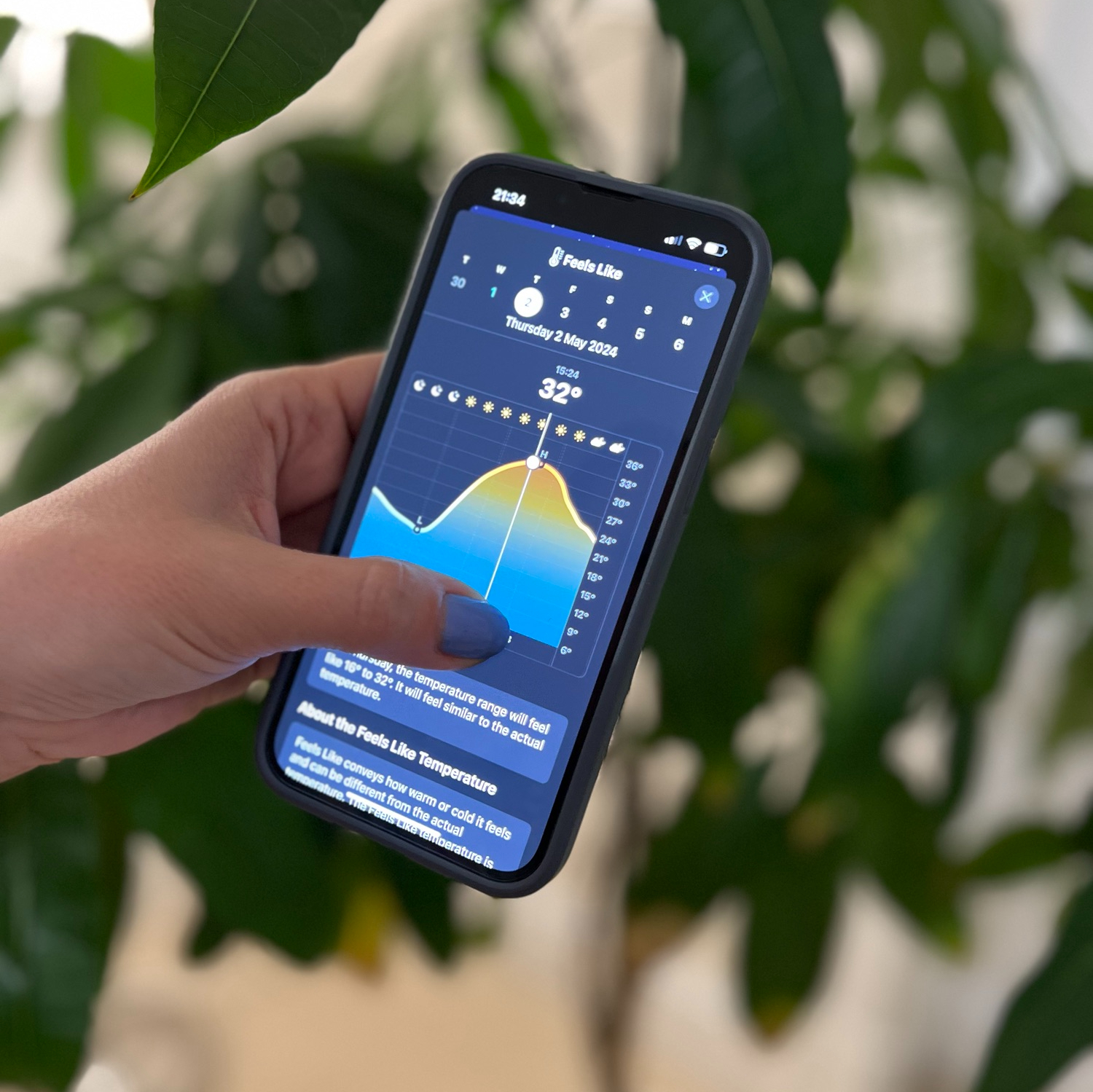
If you’re planning to exercise outside during the summer, you need to consider the heat index and not just the temperature.
The heat index is a measure of how it really feels outside when humidity and other factors are considered alongside the temperature. It’s helpful because it tells us how much heat our bodies can handle before it becomes dangerous.
Until I started running outside, I didn’t know to take the humidity into account and only ever looked at the temperature, which is also what’s most commonly reported on weather forecasts. I didn’t realize that the higher the humidity, the harder it is for our bodies to sweat and have that sweat evaporate and cool us down. If it’s very humid, it doesn’t need to be that hot outside for the weather to be dangerous to your health and you might need to modify your workout to stay safe.
How is the heat index measured?
The heat index is measured using a multiple regression analysis, which uses the % of humidity alongside the temperature outside to provide a more realistic temperature reflective of how it feels outside. Unless you’re a math genius or want to do a complicated calculation before you leave the house for your workout, you can use this helpful table from the National Weather Service to give you data you need:
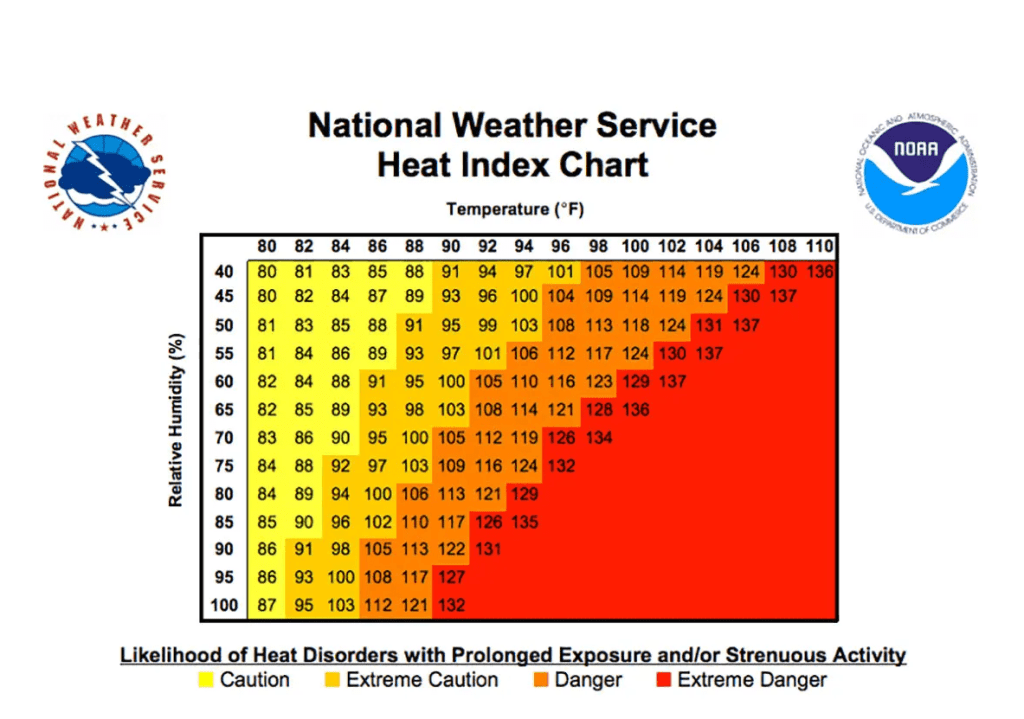
The National Weather Service uses the heat index to advise us when to be careful and what times of day to avoid being outside. You can also take a look at a weather app on your phone to see the humidity %, temperature, and ‘real feel’. It’s worth remembering that the heat index values were created to represent someone being in the shade with light wind conditions, so if you’re in the sunshine (like I am during DC summers), the index values will increase.
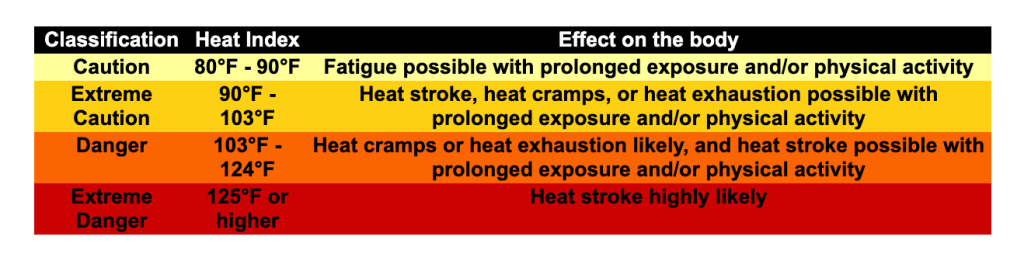
As I mentioned, until we moved to Washington DC I hadn’t paid much attention to the heat index as I was more focused on the temperature on the weather forecast. When I read the table below (also provided by the National Weather Service), I can see that many of my runs have been in the Extreme Caution or Danger zone, and that I need to be more intentional about how I prepared for the heat, adapting when necessary.
As summer approaches, I’m curious about how you modify your workouts to take account for the heat – please share below.
 trainingwithvicky.com
Leave a comment