
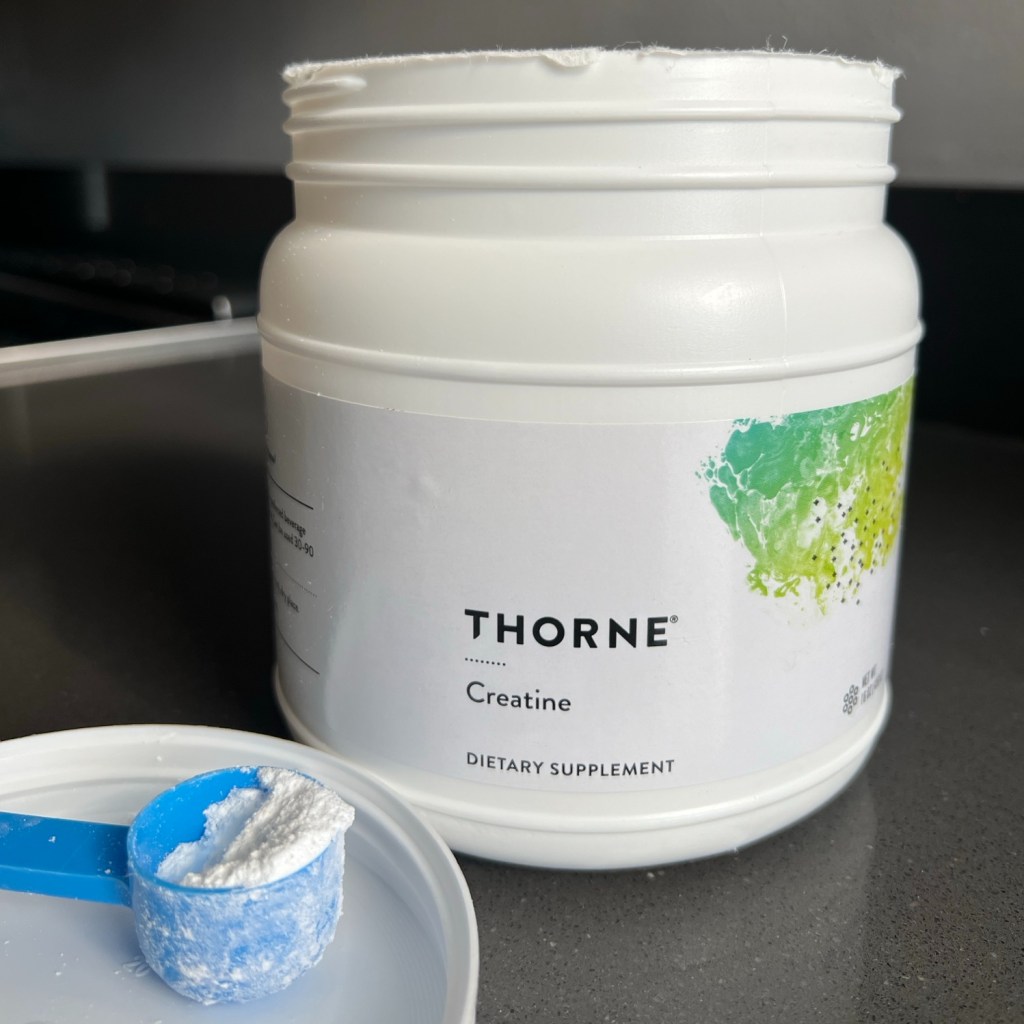
Now that I’m in my mid-40s, still training and hoping to stay healthy and active for a long time, I’ve started to do a little research into what supplements would be good to take. One supplement I recently reminded myself about was creatine, one of the most widely researched supplements available.
Creatine is a naturally occurring compound found in small amounts in certain foods like red meat and fish. It’s produced by the body, primarily in the liver, kidneys, and pancreas, and stored in the skeletal muscle. Both men and women can benefit from creatine supplementation, but as women generally eat less creatine than men (mostly due to their dietary choices of eating less meat and fish) they can benefit a little more. Women also only store 70-80 percent of the amount of creatine that males store and are known to store less in the brain in the areas that control mood, cognition, memory, and emotion.
I always thought that creatine was for people who lifted heavy weights in the gym and wanted to ‘bulk up’, so I didn’t pay it much attention, but recently studies have been hailing its benefits beyond the gym, especially for women. After reading multiple articles, I’ve learned that it can have a really positive impact upon our health:
Improved Strength and Power: Creatine has been shown to increase strength and power during high-intensity, short-duration activities like weightlifting and sprinting.
Enhanced Muscle Mass: Creatine helps increase water content in muscle cells, leading to cell volumization, which can contribute to muscle growth over time.
Increased Exercise Performance: By providing a quick source of energy (ATP) during intense activities, creatine can improve overall exercise performance and help delay fatigue.
Quick Energy Source for the Brain: Creatine not only supports muscle energy but also aids in supplying energy to the brain, potentially benefiting cognitive functions.
Recovery Support: Creatine may help reduce muscle cell damage and inflammation, promoting quicker recovery after intense exercise.
Bone Health: Some studies suggest that creatine may have a positive impact on bone health, potentially helping to improve bone density.
Potential Therapeutic Benefits: Research indicates that creatine may have therapeutic applications in conditions related to muscle and neurological disorders, such as muscular dystrophy and Parkinson’s disease.
Metabolic Health: Creatine has been linked to improvements in glucose metabolism, potentially offering benefits for those with diabetes or insulin resistance.
Brain Health and Cognitive Function: Emerging research suggests that creatine may have neuroprotective properties, potentially supporting brain health and cognitive function.
Menopausal Support: In women going through menopause, creatine supplementation has been explored for its potential to counteract declines in muscle, bone, and strength, helping maintain overall well-being.
It can be hard to figure out what type of creatine to take. When I did my initial research, I found several different option, in different forms and at different price points. Of the different creatine supplement forms, the most-researched option in women is creatine monohydrate. This form has been shown to be effective in supporting strength, power, endurance, and anaerobic working capacity.
I recently ordered Thorne’s creatine monohydrate and have started taking 5g per day, mixed into my oatmeal. It’s completely tasteless, and I don’t even notice it’s there. My husband has also decided that he want to enjoy the benefits of creatine supplementation (there’s some competition in this house!) so has been mixing it with a little water in the mornings before he heads to work. I’ve yet to feel any benefits, but I don’t think I’ve been taking it for long enough yet – I’ll keep you posted!
Do you supplement with creatine? I’m really interested to hear your experiences – please share them below. And if you’re looking for some extra reading, I love Stacey Sims. She has a great blog article ‘Why Active Women Need Creatine’
Please remember that this is not medical advice, and you should consult with your doctor when considering any supplement regime.
 trainingwithvicky.com
Leave a comment