
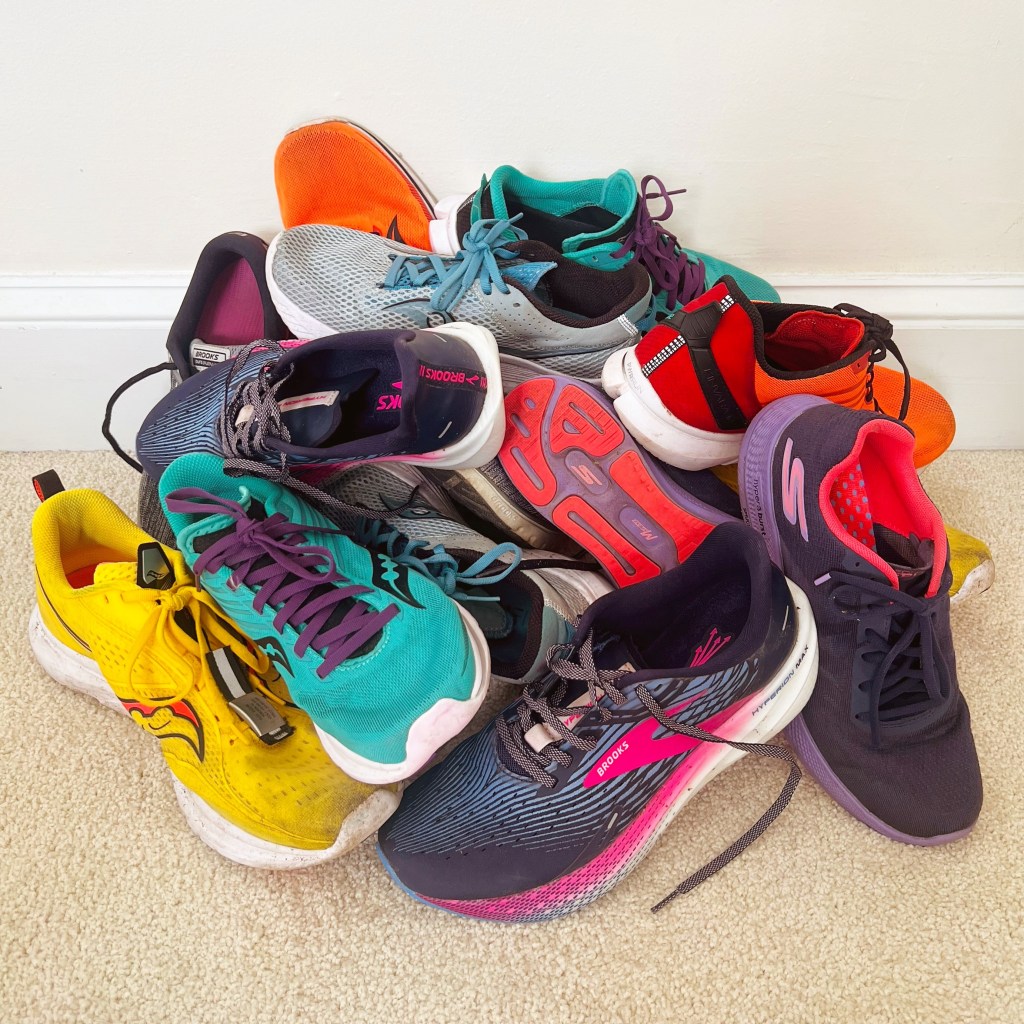
If you’re a new runner (or even if you’re not) it can be hard to know when to replace your running shoes. You can’t judge a shoe by its outward appearance (just like a book ;)) as it’s the unseen support and structure that matter most. My running shoes, Saucony Kinvaras, have just passed the 300 mile mark and based on previous experience with the same make/model, I think I likely have 50 or so miles left on them. I can usually tell when my shoes are on the way out because they lose their ‘spring’ and I become aware that I’ve had ‘dead legs’ for a few runs, or I start getting random aches in my knees or ankles. Here are some ways to help you decide when to switch up your shoes:
👟Mileage: Regular running shoes (not super shoes like the Nike Alphafly) typically have a lifespan of around 300-500 miles (480-800 kilometers). Keep track of the mileage you’ve covered in your shoes and consider replacing them once you reach this threshold. You can track your shoes in Garmin Connect or Strava if you use either of those two apps, and they will remind you when it’s time to get new ones.
👟Wear and tear: Inspect your shoes regularly. Look for visible damage such as frayed threads, holes, or significant sole wear. I particualy watch the soles because I need good grip during the wet and cold winter. If you notice excessive wear or damage, it may be time to go shopping!
👟Cushioning and support: Over time, the cushioning and support in running shoes can degrade, leading to reduced shock absorption and stability. If you start feeling more impact while running or notice a lack of support, or responsiveness, it might be a sign that your shoes are no longer providing adequate cushioning. This is the sign I usually watch for – I always end up with tired legs when my shoes are old.
👟Discomfort or pain: If you experience discomfort or pain while running or after running in your shoes, it could be an indication that they are no longer providing the necessary support. It could also be a sign of a new injury, so be careful to distinguish between the two. When my shoes are old, I occasionally get a new niggle in my knee or ankle. Within a few days of replacing them, the niggle goes away.
👟Time: Even if you haven’t reached the mileage limit, it’s generally recommended to replace running shoes every 6-12 months, depending on how frequently you run. The materials used in shoes can break down over time, regardless of mileage.
Sometimes I keep a pair of running shoes that are older but not quite ready to be retired and use them on the treadmill, which is lower impact than the roads. I then purchase a new pair for outside. I always donate my old shoes just in case someone else would find them useful or they can be recycled.
Ultimately, the decision to replace your running shoes will depend on a combination of factors. It’s important to listen to your body and pay attention to any signs that your shoes may no longer be providing the support you need. When you’re ready to go shopping, don’t forget to support your local running store!
 trainingwithvicky.com
Leave a comment